
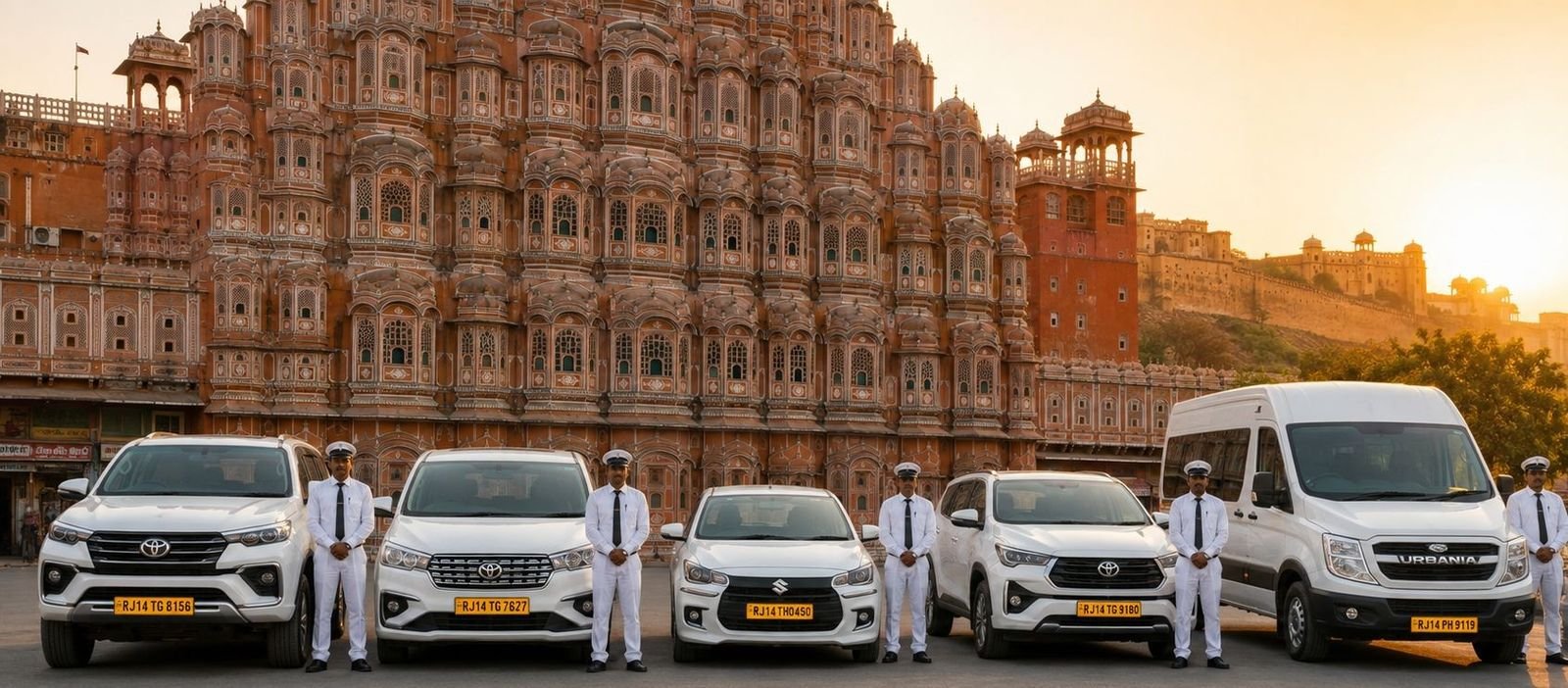
For most first-time visitors to India, driving yourself is not the easiest way to see the country. Lane discipline is more of a suggestion than a rule, road signage mixes English and regional scripts inconsistently, and the sheer density of traffic — auto-rickshaws, motorbikes, cattle, pedestrians, and trucks all sharing the same stretch of road — takes real time to get comfortable with. Hiring a chauffeur-driven car is the standard, practical solution for the vast majority of international travelers, and it's considerably more affordable and more common than most people expect before they arrive. This guide covers everything a first-time visitor typically wants to know before booking one: safety, cost, language, tipping, what a typical day looks like, and how to tell a reliable operator from a risky one.
Is It Safe?
Yes — when booked through an established, registered operator rather than an unlicensed driver arranged informally through a hotel concierge or street tout. A registered company like Ruia Travels employs full-time, background-checked chauffeurs, maintains its own fleet rather than outsourcing to random third-party cars picked up on the day, and is directly accountable for both the vehicle and the driver throughout your trip. This matters more than it might seem: if something goes wrong with the car or the route, there's a company behind the booking, not just an individual you met once.
Before booking with any operator, it's reasonable to ask a few direct questions: how long has the company been operating, are the vehicles company-owned or subcontracted, and is the driver a permanent employee or a freelancer booked for the day. Reputable operators answer these without hesitation. Ruia Travels has been running since 1996 — nearly three decades — with a fully company-owned fleet of 40+ vehicles and drivers who are trained, uniformed, and background-verified employees rather than one-off hires.
Language
English proficiency varies noticeably by driver, city, and region — a chauffeur working the well-trodden Jaipur-Agra-Delhi corridor will typically have far more practice with international guests than one operating purely local routes in a smaller town. Experienced chauffeurs working with international clients regularly, as ours do, can hold a functional conversation, understand itinerary changes on the fly, explain basic logistics (fuel stops, restroom breaks, estimated arrival times), and generally bridge the gap without difficulty. It's rarely a genuine barrier to enjoying the trip itself, though don't expect deep conversation about local history from every driver — some are naturally more talkative than others, and most take their cue from you rather than initiating.
How Booking and Payment Typically Work
You agree pricing upfront based on route, vehicle type, and duration — either a fixed daily rate for local city use, or a per-kilometre rate for outstation (intercity) trips. Tolls and parking are usually charged separately "on actuals," meaning you pay exactly what was spent, backed by receipts, rather than a padded estimate. A confirmed booking includes the vehicle, fuel, and driver as standard; there shouldn't be surprise charges beyond what's clearly stated at the time of booking.
As a rough reference, per-kilometre rates on outstation routes with Ruia Travels currently run from around ₹11/km for a compact sedan like the Maruti Dzire, up to ₹50/km for a full-size SUV like the Toyota Fortuner, with mid-range options like the Innova Crysta and Toyota Hycross in between depending on group size and comfort level. For local, city-only use, day-rate packages are typically more economical than per-kilometre billing if you're doing a lot of stop-and-go sightseeing within one city.
Reach out before your trip and get a written quote — it's standard practice, and any reputable operator will provide one readily without pressure to book immediately.
Tipping
Not mandatory, but appreciated for good service — particularly on multi-day outstation trips where the driver is essentially part of your travel team for several days running. There's no fixed rule or expected percentage the way there might be in some countries; a modest amount reflecting the length and quality of the trip is the norm. For a single-day local hire, ₹200-300 is a reasonable gesture if service was good. For a multi-day outstation trip, many travelers tip somewhere in the ₹500-1,500 range for the full trip, depending on length and how much extra effort the driver put in (route flexibility, helping with luggage, going out of their way for a good photo stop). None of this is obligatory — it's simply appreciated, not expected.
What to Expect Day to Day
Your driver will typically be waiting at the agreed pickup point at the agreed time — for airport pickups, this usually means a name-board at arrivals. Through the day, an experienced chauffeur will know the practical logistics of your route: reliable fuel stops, decent food options along highways (not just the first roadside dhaba that appears), and sensible timing for restroom breaks on longer drives. Most Indian chauffeurs are professionally reserved rather than chatty — they'll generally give you space rather than being intrusive, following your lead on how much conversation you want. Air conditioning is standard in essentially every vehicle offered to international travelers today, and a reasonable operator will have the car cleaned and fuelled before pickup, not scrambling to sort it out once you're already waiting.
On outstation trips specifically, the same driver typically stays with you for the full journey rather than being swapped out midway — this matters for continuity, since a driver who's been with you since day one already knows your preferences, pace, and any accessibility needs by day two or three.
Self-Drive vs Chauffeur-Driven
Self-drive rentals exist through other operators in India, but they are genuinely a different experience from what most Western or East Asian travelers are used to. Unfamiliar road rules, dense and unpredictable urban traffic, aggressive overtaking on highways, and the mental load of constant navigation on top of everything else you're trying to take in, add up quickly. Most international visitors — even confident, experienced drivers back home — find a chauffeur genuinely more relaxing, and not meaningfully more expensive once you account for fuel, parking hassle, potential fines for unfamiliar traffic rules, and simply the value of your own time and attention while travelling. Ruia Travels is chauffeur-driven only, which is precisely why the fleet and driver training are built entirely around getting that specific experience right, rather than splitting focus between rental and chauffeur models.
What Foreign Travelers Often Get Wrong
A few common assumptions catch first-time visitors off guard. First, many expect negotiating fares on the spot, the way informal taxi arrangements sometimes work — with a registered operator, pricing is fixed and agreed in advance, so there's no haggling required or expected. Second, some assume a chauffeur will suggest restaurants, shops, or "recommended" stops along the way for a commission — reputable operators don't run on that model, and drivers are simply there to drive safely and help with logistics, not to steer you toward specific businesses. Third, travelers sometimes underestimate how much a fixed, known price in advance genuinely reduces trip stress compared to negotiating fresh with a new driver at every stop, especially after a long flight or a full day of sightseeing.
Choosing the Right Vehicle for Your Trip
The right vehicle depends mostly on group size and how much luggage you're carrying, not just budget. For a solo traveler or couple, a compact sedan like the Maruti Dzire is efficient, easy to park in old-city lanes, and the most economical option for local sightseeing. Families of four to five tend to prefer the Toyota Rumion or Innova Crysta — both offer meaningfully more legroom and boot space for the kind of luggage international travelers typically bring on a multi-week trip.
For larger groups or anyone prioritizing extra comfort on long outstation drives, the Toyota Hycross and Toyota Fortuner sit at the premium end — the Fortuner in particular is popular for VIP pickups and longer highway stretches where ride quality over rough patches matters more. If you're travelling as a larger group — ten or more, common for extended families or small tour groups — a Force Urbania van covers that comfortably in a single vehicle rather than splitting across two cars, which also simplifies logistics considerably since everyone travels together and arrives at the same time.
| Vehicle | Best For | Typical Rate |
|---|---|---|
| Maruti Dzire | Solo travelers, couples | ₹11/km |
| Toyota Rumion | Small families (4-5) | ₹14/km |
| Innova Crysta | Families, group comfort | ₹18/km |
| Toyota Hycross | Premium comfort, longer drives | ₹22/km |
| Toyota Fortuner | VIP travel, long highway stretches | ₹50/km |
| Force Urbania | Groups of 10+ | Custom quote |
What's Actually Included in the Price
A standard chauffeur-driven booking with a reputable operator includes the vehicle itself, fuel for the agreed route, and the driver's service for the booked duration. What's typically billed separately, on actuals with receipts, are tolls, interstate permits for outstation trips crossing state lines, and parking fees at monuments or hotels. Driver accommodation and meals for multi-day outstation trips are usually the traveler's responsibility to cover (either directly or as a modest daily allowance added to the quote) — this is standard practice across the industry, not a hidden markup, and any operator should explain it clearly at the time of booking rather than leaving it as a surprise.
Night driving charges may apply if your itinerary requires travel after a certain hour, since this typically means the driver needs rest accommodation en route rather than driving straight through. Ask about this upfront if your schedule involves early morning airport departures or late-evening arrivals on an outstation trip — a transparent operator will factor it into the initial quote rather than adding it afterward.
Frequently Asked Questions
Do I need to tip the chauffeur in India?
No, tipping is not mandatory, but it's a welcome gesture for good service, especially on multi-day trips. There's no fixed percentage expected — a modest amount based on trip length and service quality is standard practice.
Will my chauffeur speak English?
Drivers experienced with international clients, such as those working regularly on the Jaipur-Agra-Delhi corridor, typically have functional conversational English sufficient for logistics, itinerary changes, and basic conversation. It's rarely a real barrier for the trip.
Is a chauffeur-driven car more expensive than self-drive?
Not meaningfully once you account for fuel, parking, and the value of your own attention while navigating unfamiliar roads. Pricing is agreed upfront by route, vehicle, and duration, with tolls and parking billed separately on actuals — there are no hidden surprises with a reputable operator.
Does the same driver stay with me for the whole trip?
On multi-day outstation trips, yes — the same chauffeur typically stays with you for the full journey rather than being swapped mid-route. This means continuity: by day two or three, your driver already understands your pace and preferences.
How Far Ahead Should You Book?
For airport transfers and single-day local hires, most operators can accommodate bookings made just a day or two in advance, sometimes even same-day depending on fleet availability. For outstation trips — especially during peak travel season from October through March, and particularly around major festivals or the winter wedding season — booking a week or more ahead is worth doing, since the best vehicles and most experienced drivers for longer routes tend to fill up first. If your trip includes a specific vehicle preference (a Fortuner for a long highway stretch, for instance, rather than whatever's available), advance booking matters even more.
If you're building a longer, multi-city itinerary spanning several days or weeks, it's often more efficient to arrange the entire route as one continuous booking with a single operator rather than booking separate local transfers city by city. This keeps pricing predictable, avoids re-negotiating with a new driver at every stop, and means your chauffeur already understands your full itinerary and pace by the time you reach city two or three.
Booking with Ruia Travels
In business since 1996 — over 30 years of experience — with a fully company-owned fleet of 40+ vehicles, Ruia Travels regularly works with international clients on Rajasthan and Golden Triangle itineraries. Book online or contact us for a tailored quote.